Ultra High Water Pressure Jet
Definitions
A method of surface preparation.
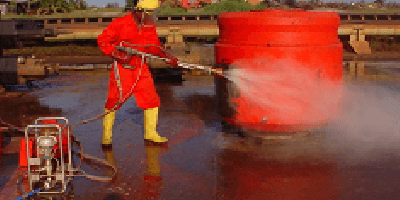
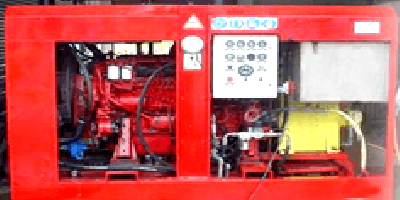
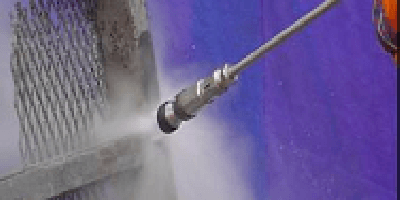
Reasons to Consider in using UHWPJ Meathod
- For effective removal of chloride or salt contents from the surface.
- Removal of contaminants are important in the surface preparation other than other blasting methods.
- No excessive dust as compared to conventional blasting
- The surrounding equipment will not be subjected to abrasives.
- The medium is water and NOT abrasives (sand, garnet, copper slag).
- Environmental-friendly (only water is used!).
- The debris paint can easily be segregated and removed from water.
- Air quality is maintained.
- Reduce medium importation (garnet and other media).
As for the owners/operators of processing plants or factories who are considering the various coating system in their preventive maintenance regime, one of the “wish-list” of these owners/operators is to have a coating system (and its corresponding surface preparation method) that does NOT require a partial or complete shutdown of the plant or factory. As this method only deals with water, usually a complete shutdown is NOT required and coupled with a coating system which also does NOT require a complete shutdown of the plant/factory will provide an “ideal” and cost-saving system for the maintenance regime of the plant/factory.
Ss the UHWPJ system does NOT produce fire-sparks when the water jet hits the surface of the substrate, it is ideal to be used on flammable areas or areas that have explosive substances.

It cannot provide the profile or “peaks” and “valleys” of NEW steel.
Standards
The Joint Standards NACE No.5 SSPC SP-12 “SURFACE PREPARATION AND CLEANING OF STEEL ABD OTHER HARD MATERIALS BY HIGH AND ULTRA-HIGH PRESSURE WATER JETTING PRIOR TO RECOATING” specifies as follows:
WJ-1: Surface shall be free of all previously visible rust, coatings, mill
scales and foreign matter and have matte finish.
of the surface area free of all previously existing revenues and the
remaining 5% containing only randomly dispersed stains of rust,
coatings and foreign matter.
1/3 containing only randomly dispersed stains of previously existing
rust, coatings and foreign matter.
coatings uniformly removed.